Samsung Galaxy S26+ Review
person
TechCompare Team
Updated Recently
verified Independent Review

New
The Verdict
Editor's ChoiceThe Galaxy S26+ innovates in 2026 with industry-leading 7-year OS support and a brilliant 2600-nit display, ensuring visibility in any light. Its advanced AI hardware promises seamless next-gen experiences. However, 45W charging, while good for quick boosts, lags rivals like the Pixel 10 Pro. Its 4900 mAh battery may also challenge heavy users. For unparalleled longevity and screen quality, it's a compelling choice versus the iPhone 17, though the regional chipset split remains a concern.
4.5
star star star star star_half
Outstanding check_circle Pros
- Unmatched OS Longevity & AI: With Android 16 and a class-leading 7 major OS upgrades, the S26+ is future-proofed for the next seven years. Its Snapdragon 8 Elite Gen 5 (or Exynos 2600) chipset ensures next-gen on-device AI functions, from advanced photo processing to real-time translations, run seamlessly, putting it ahead of rivals offering shorter support cycles.
- Brilliant, Visible Display: The 6.7-inch Dynamic LTPO AMOLED 2X panel boasts an astonishing 2600 nits peak brightness. This means whether you're checking maps under harsh midday sun in Rome or consuming HDR content, visuals remain incredibly vibrant and legible, a clear advantage over even the excellent screens on the Pixel 10 series.
- Robust Flagship Performance: The combination of the Snapdragon 8 Elite Gen 5 / Exynos 2600 and 12GB RAM provides formidable power for any task. From demanding 3D gaming to intensive multi-tasking, the S26+ handles everything effortlessly, ensuring a fluid user experience that will easily keep pace with future software demands, unlike some mid-range offerings.
cancel Cons
- Charging Speed Lags Rivals: While 45W wired charging delivers 69% in 30 minutes – enough to top up during a coffee break – it's no longer cutting-edge in 2026. Many competitors, such as the rumored Xiaomi 15 Pro, offer significantly faster charging, meaning you'll spend more time tethered to an outlet for a full charge.
- Persistent Regional Chipset Divide: The continued split between Qualcomm Snapdragon in US/CN and Exynos in other regions, despite both being powerful, creates a potential inconsistency in user experience regarding performance or battery efficiency. This lack of a unified global standard is something Apple's iPhone series avoids, ensuring identical performance worldwide.
- Good, Not Great Battery Capacity: The 4900 mAh battery is respectable for a flagship but, for a 'Plus' model in 2026 with a power-hungry 2600-nit display and advanced AI, it might not offer exceptional endurance. Heavy users constantly streaming 5G content or utilizing AI features might find themselves reaching for a charger earlier in the evening compared to an iPhone 17 Pro Max.
Technical Specifications
cell_tower
NETWORK
| Technology | GSM / CDMA / HSPA / EVDO / LTE / 5G |
|---|---|
| 2G bands | GSM 850 / 900 / 1800 / 1900 |
| 3G bands | HSDPA 850 / 900 / 1700(AWS) / 1900 / 2100 |
| 4G bands | 1, 2, 3, 4, 5, 7, 8, 12, 13, 17, 18, 19, 20, 25, 26, 28, 32, 38, 39, 40, 41, 66 - International |
| 5G bands | 1, 2, 3, 5, 7, 8, 12, 20, 25, 26, 28, 38, 40, 41, 66, 75, 77, 78 SA/NSA/Sub6 - International |
| Speed | HSPA, LTE (CA), 5G |
rocket_launch
LAUNCH
| Announced | 2026, February 25 |
|---|---|
| Status | Coming soon. Exp. release 2026, March 06 |
smartphone
BODY
| Dimensions | 158.4 x 75.8 x 7.3 mm (6.24 x 2.98 x 0.29 in) |
|---|---|
| Weight | 190 g (6.70 oz) |
| Build | Glass front (Gorilla Glass Victus 2), glass back (Gorilla Glass Victus 2), aluminum frame |
| SIM | · Nano-SIM + Nano-SIM + eSIM + eSIM (max 2 at a time) - INT · Nano-SIM + eSIM + eSIM (max 2 at a time) - USA · Nano-SIM + Nano-SIM - CN |
display_settings
DISPLAY
| Type | Dynamic LTPO AMOLED 2X, 120Hz, HDR10+, 2600 nits (peak) |
|---|---|
| Size | 6.7 inches, 108.9 cm2 (~90.7% screen-to-body ratio) |
| Resolution | 1440 x 3120 pixels, 19.5:9 ratio (~516 ppi density) |
| Protection | Corning Gorilla Glass Victus 2, Mohs level 5 |
developer_board
PLATFORM
| OS | Android 16, up to 7 major Android upgrades, One UI 8.5 |
|---|---|
| Chipset | Qualcomm SM8850-AC Snapdragon 8 Elite Gen 5 (3 nm) - US/CN Exynos 2600 (2 nm) - ROW |
| CPU | Octa-core (2x4.74 GHz Oryon V3 Phoenix L + 6x3.62 GHz Oryon V3 Phoenix M) - US/CN 10-core (1x3.80GHz C1-Ultra & 3x3.25GHz C1-Pro & 6x2.75GHz C1-Pro) - ROW |
| GPU | Adreno 840 - US/CN Xclipse 960 - ROW |
sd_card
MEMORY
| Card slot | No |
|---|---|
| Internal | 256GB 12GB RAM, 512GB 12GB RAM |
photo_camera
MAIN CAMERA
| Triple | 50 MP, f/1.8, 24mm (wide), 1/1.56", 1.0µm, dual pixel PDAF, OIS 10 MP, f/2.4, 67mm (telephoto), 1/3.94", 1.0µm, PDAF, OIS, 3x optical zoom 12 MP, f/2.2, 13mm, 120˚ (ultrawide), 1/2.55" 1.4µm, Super Steady video |
|---|---|
| Features | Best Face, Horizon Lock, LED flash, auto-HDR, panorama |
| Video | 8K@24/30fps, 4K@30/60fps, 1080p@30/60/120/240fps, 10-bit HDR, HDR10+, stereo sound rec., gyro-EIS |
photo_camera_front
SELFIE CAMERA
| Single | 12 MP, f/2.2, 26mm (wide), 1/3.2", 1.12µm, dual pixel PDAF |
|---|---|
| Features | HDR, HDR10+ |
| Video | 4K@30/60fps, 1080p@30fps |
volume_up
SOUND
| Loudspeaker | Yes, with stereo speakers |
|---|---|
| 3.5mm jack | No |
wifi
COMMS
| WLAN | Wi-Fi 802.11 a/b/g/n/ac/6e/7, tri-band, Wi-Fi Direct |
|---|---|
| Bluetooth | 6.0, A2DP, LE |
| Positioning | GPS, GLONASS, BDS, GALILEO, QZSS |
| NFC | Yes |
| Radio | No |
| USB | USB Type-C 3.2, DisplayPort 1.2, OTG |
stars
FEATURES
| Sensors | Fingerprint (under display, ultrasonic), accelerometer, gyro, proximity, compass, barometer |
|---|
battery_full
BATTERY
| Type | Li-Ion 4900 mAh |
|---|---|
| Charging | 45W wired, PD3.0, 69% in 30 min 20W wireless (Qi2.2) 4.5W reverse wireless |
info
MISC
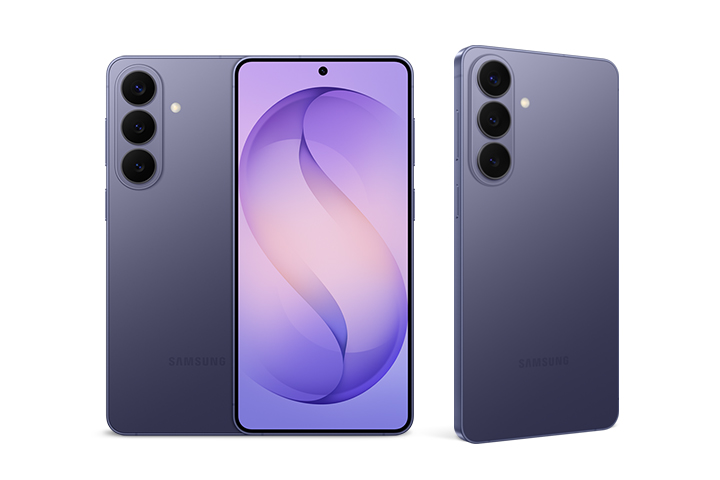
| Colors | Cobalt Violet, Sky Blue, Black, White, Silver Shadow, Pink Gold |
|---|---|
| Models | SM-S947B, SM-S947B/DS, SM-S947U, SM-S947U1, SM-S947W, SM-S947N, SM-S9470, SM-S947E, SM-S947E/DS |
| SAR | 1.15 W/kg (head) 1.17 W/kg (body) |
| SAR EU | 0.78 W/kg (head) 1.22 W/kg (body) |

Samsung Galaxy S26+
star star star star star_half
(100) $999.99Fair Price
Stable
Secure transaction
Popular Comparisons for this Phone

Latest From The Lab
 New
New
Mobile Today
Is iPhone Fold Coming September 2026? Specs Compared to Galaxy Z Fold 8
schedule 13 min read
arrow_forward
 New
New
Components 6 days ago
Intel Panther Lake Upgrade Path Worth It? The 2026 Reality Check
schedule 6 min read
arrow_forward

Components 1 week ago
DDR5 RAM Price Drop 2026: Why Waiting Will Destroy Your PC Build Budget
schedule 6 min read
arrow_forward
