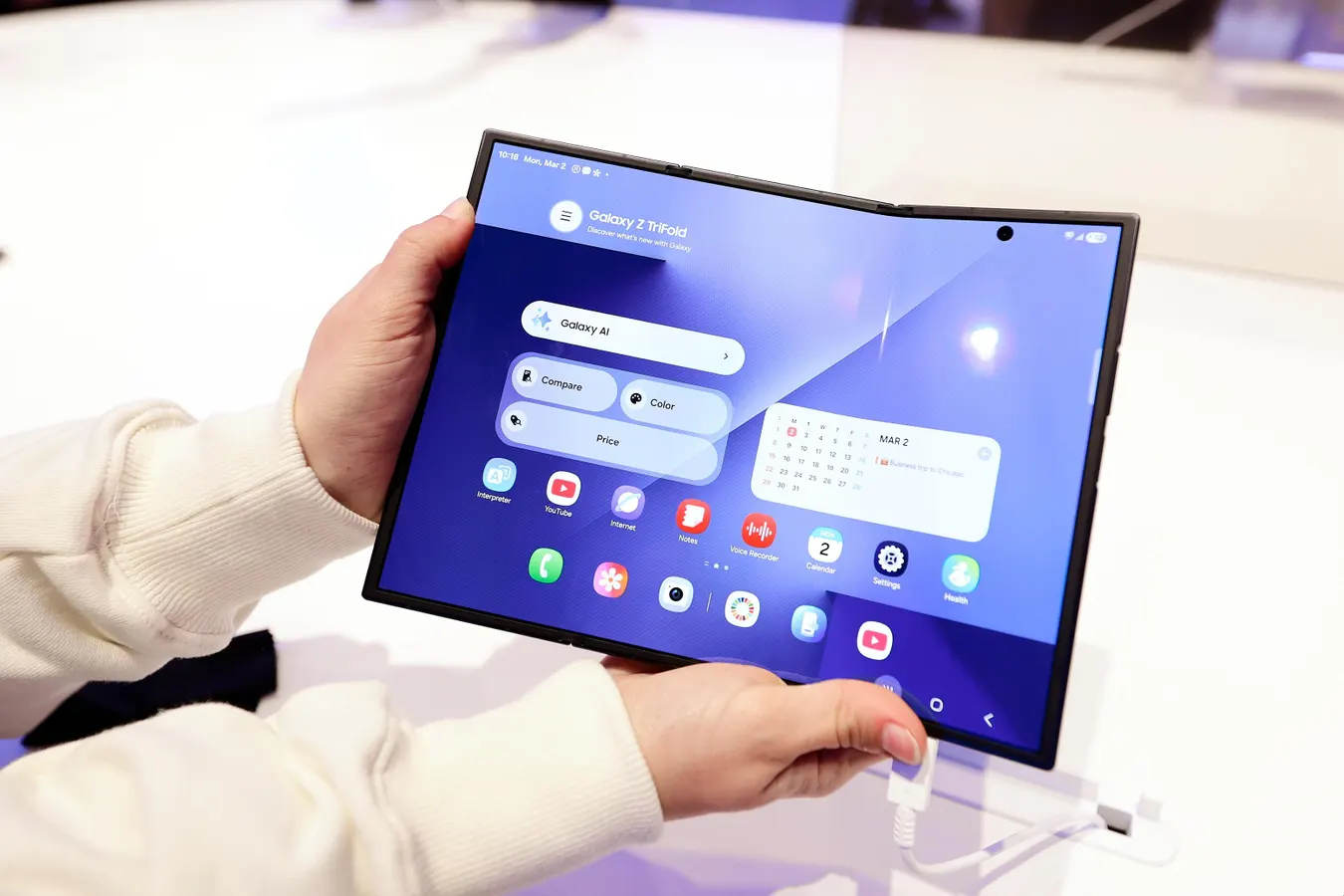
Samsung Galaxy Z Fold 8 Review: Aggregated Specs, Design, and Value Analysis
The foldable smartphone sector has graduated from an experimental playground into a cutthroat commercial ecosystem. For mainstream consumers planning their next premium device migration, synthesizing a comprehensive samsung galaxy z fold 8 review requires analyzing structural hardware updates and production allocation metrics. Samsung has historically favored iterative refinements, a trend observed across prior hardware cycles. However, impending competitive pressure from alternative folding formats arriving in late 2026 has forced a distinct structural transformation in the brand's production philosophy. (If you want to compare other recent device designs, see our Nothing Phone 3a Pro review).
Aggregated data collected from component supply chains, certified regulatory databases, and reputable industry tracking logs reveals a major form-factor pivot. Rather than sticking to the narrow dimensions that defined earlier iterations, the latest development pipeline outlines a dual-model framework. The device architecture splits into a standard, shorter passport-inspired silhouette and a ultra-premium variant targeting maximized screen dimensions. This analytical breakdown aggregates compiled engineering data, display benchmarks, and platform processing metrics to deliver a comprehensive market overview.
The Design Pivot: Shorter, Wider, and Passport-Inspired Layouts
According to compiled hardware CAD renders and physical dummy unit leaks distributed throughout the tech ecosystem, the design blueprint marks a significant departure from historical trends. Smartphone buyers have frequently requested changes to the traditional cover screen aspect ratio, which many found too narrow for comfortable typing.
The standard internal tracking documents, carrying the core model numbers SM-F976 and SM-F971, reveal that the standard foldable model is undergoing a distinct physical reshaping. The device features a reduced overall height profile paired with a wider physical footprint, mimicking a passport form-factor.
Telemetry logs and dimension metrics detail the specific structural shifts across the product line:
- The Cover Screen Realignment: The external cover display moves to a standard 5.4-inch to 5.5-inch panel on the baseline wider model, utilizing aspect ratios that align directly with standard smartphone formats. This layout allows for ergonomic, single-handed typing and eliminates application scaling errors.
- The Square Inner Canvas: Because the outer chassis has expanded horizontally, unfolding the device exposes a nearly square 7.6-inch interior main screen. This square profile optimizes side-by-side app multitasking and split-screen web browsing.
- The Ultra Premium Divergence: Parallel supply logs indicate that a secondary model, the Wide or Ultra variant, pushes the footprint even further, featuring a massive 6.5-inch cover display that unfolds into an expansive 8.0-inch main internal canvas.
Hinge Engineering and the Dual-Layer UTG Crease Reduction
The primary engineering challenges for book-style foldables have consistently focused on structural durability and display crease visibility. Industry intelligence from supply chain forums like Naver indicates that Samsung has deployed a comprehensive mechanical overhaul of its folding spine assembly.
The upgraded hinge infrastructure introduces a completely redesigned tension-control system. Rather than utilizing rigid, high-friction lock positions throughout the entire unfolding arc, the new mechanics allow the display panel to settle into a fluid, gradual curve.
Data parameters tracking screen uniformity indicate that this change brings crease reduction on par with top-tier category competitors. The visual indentation line across the middle of the display shows an estimated 20 percent reduction in depth compared to prior generations. (For details on older mobile designs, check out our Google Pixel 3a review).
Hinge Tension and Display Uniformity Metrics Overview
Panel Substrate Technology: Dual-layer Ultra-Thin Glass coupled with laser-drilled metal support plates.
Visual Crease Variance: Measurable 20 percent reduction in fold line visibility under direct overhead lighting.
Flex Mode Operational Behavior: Fluid mechanical movement across standard arcs, though tracking metrics indicate slightly reduced rigid stability at extreme angles.
The trade-off for this smoother crease profile involves a minor modification to traditional Flex Mode behavior. Because the hinge priorities favor a tension-free flat state, the screen does not lock quite as rigidly at shallow angles. This shift is mitigated by a built-in foreign material detection system, which uses automated internal sensors to warn users if debris enters the hinge cavity before closure.
Silicon Performance and Internal Infrastructure

Performance profiling benchmarks for the core hardware architecture reveal an expansive processing environment. Across international variants, the processing platform is powered by the custom Qualcomm Snapdragon 8 Elite Gen 5 chipset.
The integrated processor utilizes advanced 3-nanometer architectural designs, delivering a massive increase in localized neural processing unit performance to support native machine learning automation. Database entries show that the base model comes equipped with a mandatory 12GB of high-bandwidth system memory, while top-tier 16GB RAM allocations are paired exclusively with the premium 1TB internal storage tiers.
Thermal management reports show that the hardware is equipped with an enlarged dual-path vapor chamber cooling loop. This cooling array prevents localized heat build-up from throttling frame rates during prolonged multitasking sessions or demanding game rendering loops. (If you are interested in hardware specs instead of mobile devices, see our latest comparison of the best AM5 motherboards for PC builds or organize your components with our Interactive PC Build Checker).
Energy efficiency models show that battery capacities have expanded significantly, moving up to a 4,800mAh baseline cell on the standard model, while the larger variant pushes limits with a dual-cell 5,000mAh capacity. Wired charging metrics track at a stable 45W limit, complemented by 25W Qi2 wireless charging configurations that feature integrated magnetic array alignments.
The Camera Matrix: Distinguishing the Standard and Ultra Tiers
Camera sensor distribution sheets indicate a clear strategic divergence between the standard wide form-factor and the ultra-premium models. To achieve a highly competitive physical thickness target of less than 5mm when fully unfolded, the standard model utilizes a streamlined dual-lens system.
The standard version drops the traditional dedicated telephoto lens entirely, relying instead on a high-resolution 50MP primary wide sensor paired with an upgraded 50MP ultra-wide camera module. Computational imaging data indicates that the system processes images at a default 24MP file resolution, capturing massive dynamic range improvements over historical 12MP baselines.
For users who require advanced optical zoom options, the premium Ultra model retains a triple-camera matrix. This top-tier camera layout integrates a massive 200MP main sensor, an upgraded 50MP ultra-wide sensor, and a dedicated 10MP telephoto module capable of 3x native optical zoom.
Software integration is managed by Android 17 layered beneath One UI 9, backed by an official seven-year corporate support commitment providing continuous security updates through 2033. One specific omission noted in early code analysis is the lack of a built-in hardware privacy layer on the inner display, a feature currently reserved exclusively for standard candy-bar flagship devices.
Summary Matrix: Galaxy Z Fold 8 Technical Specification Index
The data matrix below compiles and organizes leaked engineering statistics and hardware profiles ahead of the official mid-2026 launch cycles.
| Technical Parameter | Standard Wider Model Specification | Ultra / Wide Premium Specification |
|---|---|---|
| Chassis Dimensions (Unfolded) | 123.9 x 161.4 x 4.5 mm | 158.4 x 143.2 x |
| 4.5 mm | ||
| Chassis Weight Profile | Roughly 201 grams | Approximately 215 grams |
| Primary System Chipset | Snapdragon 8 Elite Gen 5 | Snapdragon 8 Elite Gen |
| 5 for Galaxy | ||
| System RAM Allocations | 12GB Base Configuration | 12GB / 16GB |
| High-Bandwidth Tiers | ||
| Internal Flash Storage | 256GB / 512GB | 512GB / 1TB Enterprise Tiers |
| Main Camera Configuration | 50MP Wide + 50MP Ultra-Wide | 200MP Wide + 50MP |
| Ultra-Wide + 10MP Telephoto | ||
| Battery Cell Capacity | 4,800 mAh | 5,000 mAh Dual-Cell |
| Operating System Base | One UI 9 / Android 17 | One UI 9 / Android 17 |
Frequently Asked Questions (FAQ)
Aggregated engineering dockets indicate that the standard model adopts a passport-style form-factor that is noticeably shorter and wider than prior generations. This change addresses a major user complaint by creating a wider, more ergonomic 5.5-inch cover screen that makes typing much easier without unfolding the phone.
The display assembly utilizes a dual-layer Ultra-Thin Glass substrate combined with an updated laser-drilled metal support plate beneath the OLED panel. This layout matches a re-engineered fluid hinge mechanism that guides the panel into a gradual curve, reducing visible crease depth by an estimated 20 percent.
No, supply-chain documentation reveals that the standard model features a streamlined dual-camera array consisting of a 50MP wide lens and a 50MP ultra-wide lens. To get a dedicated 3x optical telephoto lens and a 200MP sensor, users must look toward the premium Ultra or Wide flagship model.
Because the new hinge architecture utilizes lower internal structural tension to achieve a smooth fold line, it is slightly more sensitive to pocket debris. The automated foreign material detection system uses internal sensors to alert users if particles enter the mechanical spine, helping prevent accidental damage to the flexible interior screen.
The device family launches with Android 17 beneath Samsung's One UI 9 software layer. Following official corporate update policies, both models receive a full seven years of mandatory operating system upgrades and security path deployments, guaranteeing official system support through 2033. (For streaming comparisons, see our guide on the Spotify vs YouTube Music 2026 review).
Aggregated retail scheduling logs point to an official confirmation reveal at Samsung's Galaxy Unpacked event on July 22, 2026, with market release following roughly two weeks later. Credible leaks indicate starting prices will range between 1,999 and 2,099 dollars depending on the specific regional hardware tier.